
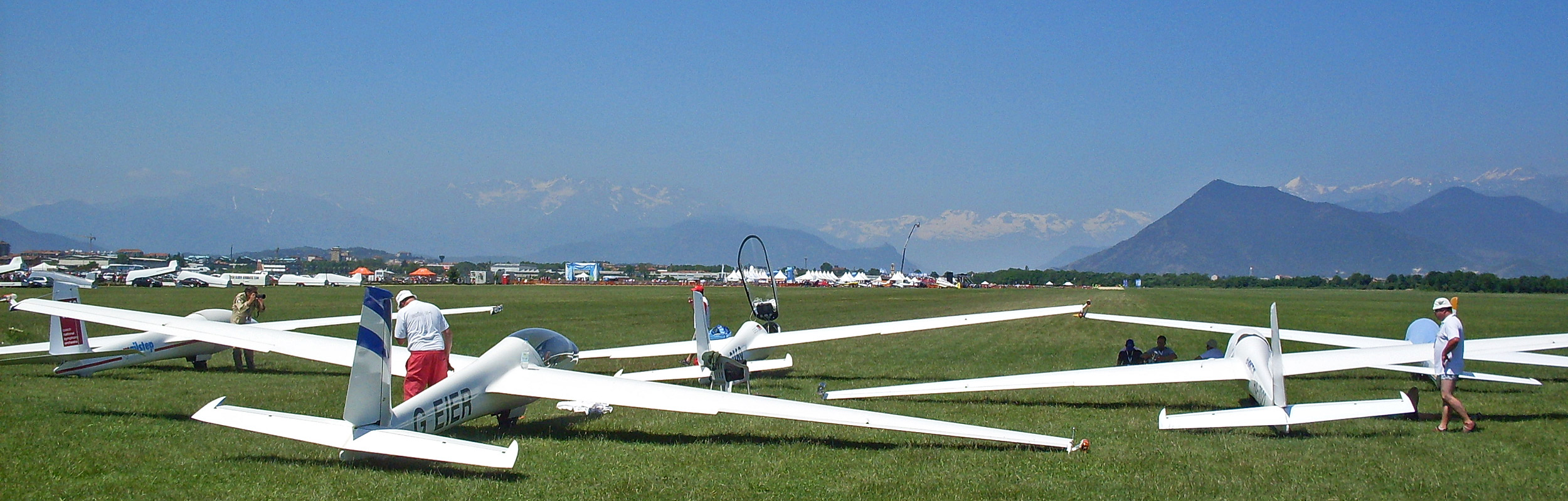
What is the CIVA 'HMD' system?
HMD stands for the Height Measuring Device that is used to monitor the altitude of the glider throughout each FAI Glider Aerobatic Championship flight. Energy and altitude management are very significant parameters in glider aerobatics compared to power aerobatics .... just a few extra metres during a competition flight can make all the difference between having the top score and falling w-a-y down in the results.
Another important aspect is safety - when not enough altitude remains to finish a glider sequence then the performance is over, and it is imperative that the pilot stops the aerobatics and switches concentration immediately to planning the circuit and landing. The main purpose of HMD is therefore to tell the pilot and the Chief Judge exactly when the glider crosses the upper and lower altitude limits during the sequence. Any infringement will lead immediately to a Too High or Too Low penalty, a great motivation to the pilot to manage the energy properly during the flight.
The HMD comprises two main parts:
- In the glider an electronic box is temporarily installed - firstly to give a loud beep via an internal speaker and let pilot know when the glider descends through the upper limit, and secondly to beep again when the glider passes through the lower altitude limit, by which time the sequence must have been concluded. Data from the glider-mounted HMD is transmitted to the ground station in real time through a radio link.
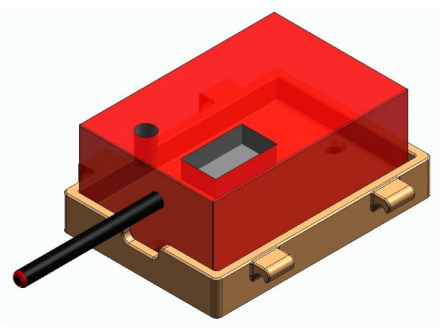
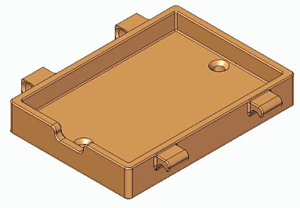
- For the glider competitors should create a 3D printed plastic bracket to hold the HMD securely in a horizontal attitude at a convenient point that is easily accessible by the pilot and technicians. The HMD should thus be held on the main axis of the glider with the aeriel pointing either toward the nose or at right-angles along the axis of the wings. In this manner the unit can easily be installed and secured using rubber bands, then subsequently removed so that the data can be copied out to a ground-based data store for future reference.
-
Here is a downloadable zip-file of two essential 3D printer files to enable production of the necessary mounting bracket:
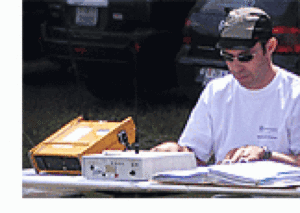
- On the ground another set of hardware, usually located on the Chief Judge's desk, lets the Judges know if the pilot is operating within the allowed altitude levels. The signalling here is also indicated by loud beeps from the control station hardware box. The Chief Judge is responsible for marking those beeps / infringements onto the pilots scoring sheet.
Installation and Performance:
Calibration, installation, setting up, checking, and removal of the HMD onboard transmitters are performed by members of the Technical Commission or persons specifically designated for this duty. The pilot however is responsible for the secure mounting of the HMD transmitter inside the glider, therefore if the transmitter became loose during the flight due to improper mounting this will not be accepted as a valid technical failure and a re-flight would not be allowed.
The core function of the HMD is height monitoring via an electronic pressure sensor. In addition the HMD includes a 3-axis rotary angle sensor, a G-load sensor and a GPS unit. These are used to provide additional information, such as position and movement of the glider, allowing more detailed analysis of the flight if necessary. They are however not used for the primary function which is the monitoring of height.
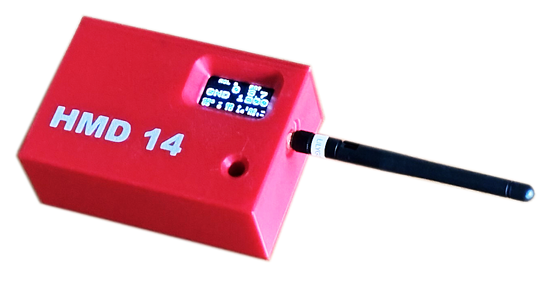 Regarding height, the HMD sends the height data down to the ground station, plus the current status, i.e. whether the HMD is beeping or not. The determination of whether the glider is either above or below the performance zone is done by the HMD, which provides information but does not do any calculations. There is no height interpretation or altitude processing in the ground station.
Here is a PDF that explains the key aspects of this essential equipment:
HMD in operation
Each pilot oversees the installation of an HMD box into the glider shortly before taking off for the competition flight. Whilst on tow the HMD box starts to beep at 100m AGL to provide a functionality check. The beeping stops at 200m AGL and starts again at 1,200m, this upper altitude beeping usually set to stop at 1,300m. The pilot should start the programme below 1,200m and thus without any beeping.
Penalties
Judging of the figures begins after the third wing rock, at which point the HMD must also have stopped beeping to indicate that the glider has descended to below 1,200m. If the unit is still beeping or the glider rises again to over 1,200m and beeps during the first figure, a 70 point "Too High" penalty is applied. Any subsequent upper limit beeping is not taken into account.
If lower limit beeping is received by the Chief Judge while a figure is being flown then a 70 point "Too Low" penalty is applied. If the glider subsequently rises to over 200m (the beeping stops) and then the 200m lower limit is crossed again (the beeping restarts) while figures continue to be executed, the pilot will receive an additional 70 penalty points.
The beeping finally stops when the glider passes below 100m, and if figures are still being flown then the pilot will be disqualified from the entire programme.